Kyoto in summer is not silent.
It hums.
Cicadas sing from hidden branches. Rainwater slips from tiled rooftops into mossy gardens. Lanterns glow in narrow lanes where wooden townhouses seem to hold centuries of remembered footsteps.
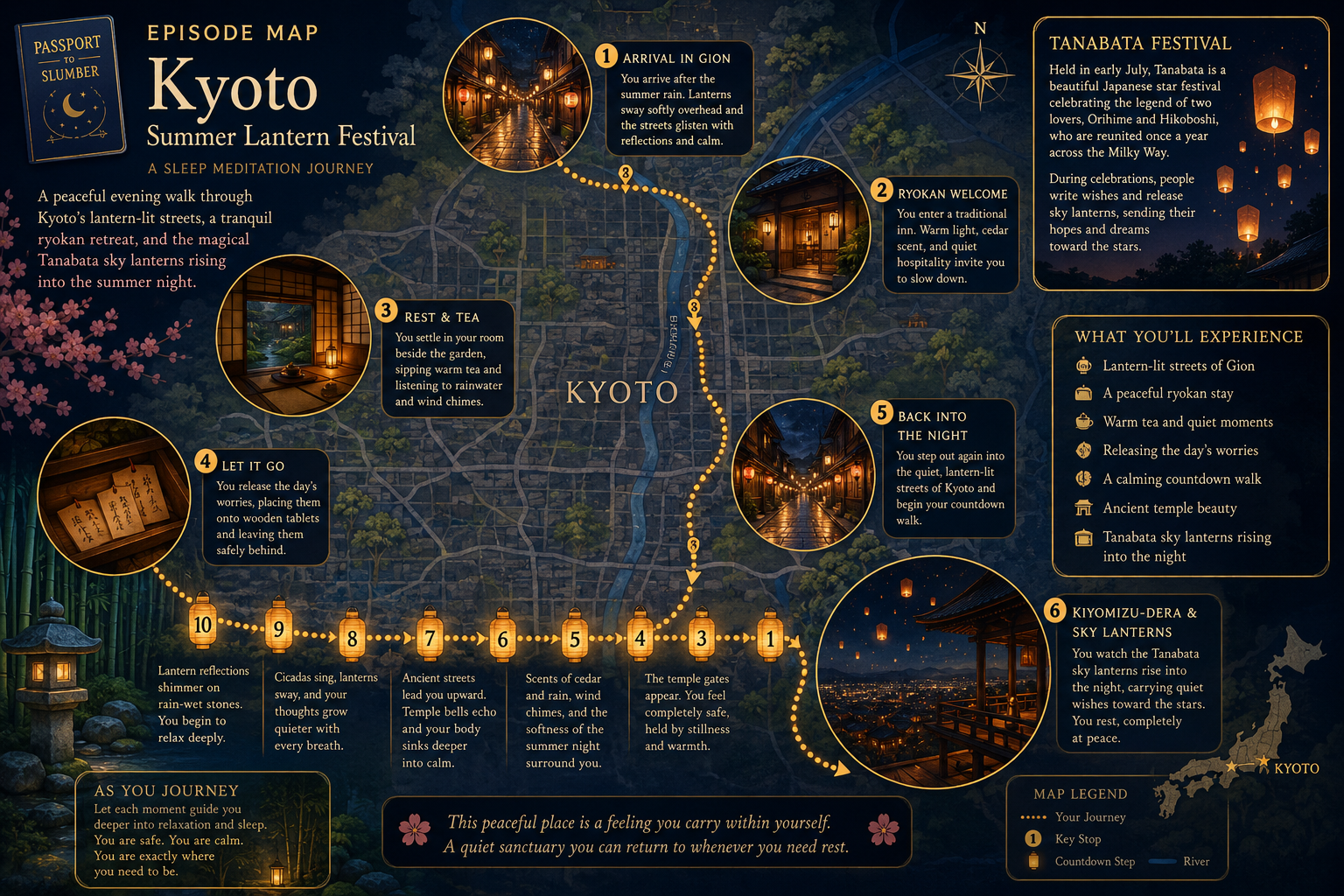
In this episode, Kyoto is not presented as a place to rush through, photograph, or check from a list. It is Kyoto after the rain. Kyoto at night. Kyoto as a feeling — warm, fragrant, ancient, and tender.
The journey begins in Gion, one of Kyoto’s most atmospheric historic districts, near the willow-lined Shirakawa Canal. From there, the listener enters the quiet shelter of a ryokan before continuing toward the eastern hills and the sacred grounds of Kiyomizu-dera, a temple whose history reaches back more than 1,250 years.
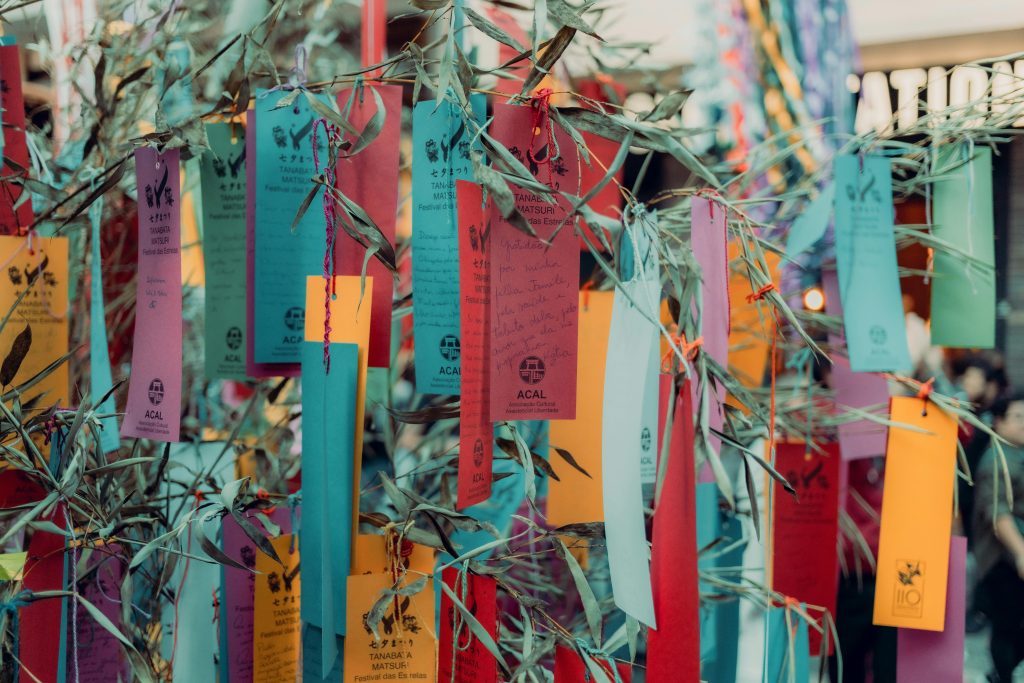
At the heart of this episode is Tanabata, Japan’s Star Festival — a summer tradition connected to the story of two celestial lovers, often represented by the stars Vega and Altair, who are separated by the Milky Way and allowed to meet once a year. One of Tanabata’s most beloved customs is writing wishes on colorful paper strips called tanzaku and hanging them from bamboo branches.
In the meditation, this tradition becomes a quiet emotional release. You will write a wish, tie it to bamboo, and let the night breeze carry it into stillness.
Kiyomizu-dera also carries deep spiritual significance. The temple is associated with Kannon, the bodhisattva of compassion, and its name is connected to the pure waters of Otowa Waterfall.
Gion
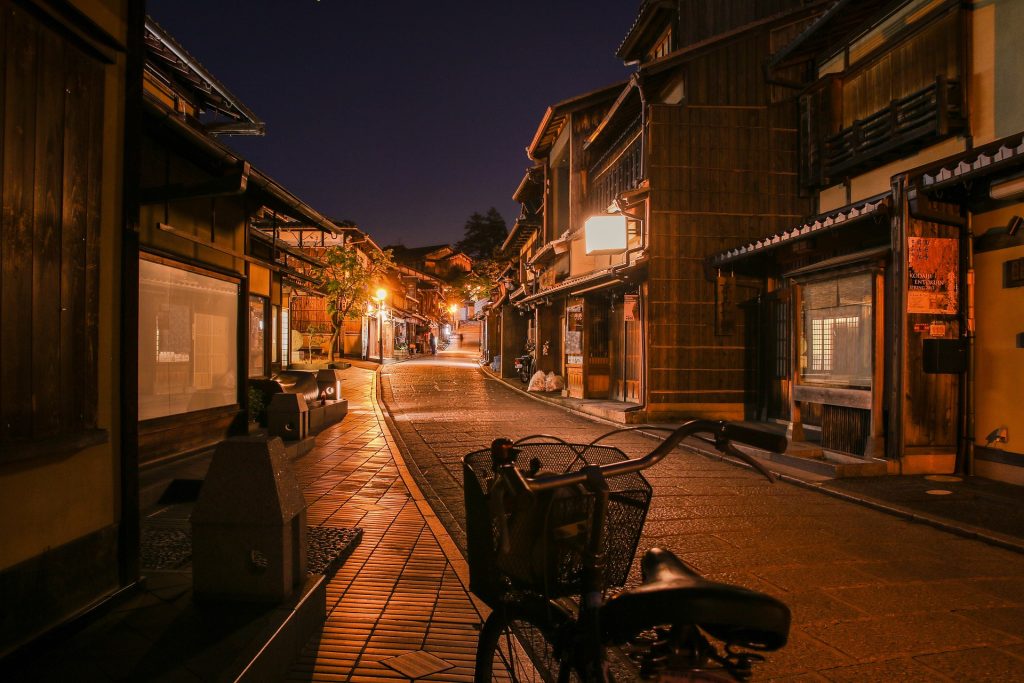
A historic Kyoto district known for traditional wooden architecture, tea houses, lantern-lit lanes, and the quiet beauty of the Shirakawa Canal area.
Shirakawa Canal
A gentle canal lined with willows and stone bridges, often associated with some of Gion’s most graceful evening scenery.
Ryokan
A traditional Japanese inn centered around hospitality, simplicity, quiet rooms, tatami flooring, and a slower rhythm of rest.
Kiyomizu-dera
A revered Kyoto temple founded in 778, known for its wooden veranda, mountain setting, connection to Kannon, and the waters of Otowa Waterfall.
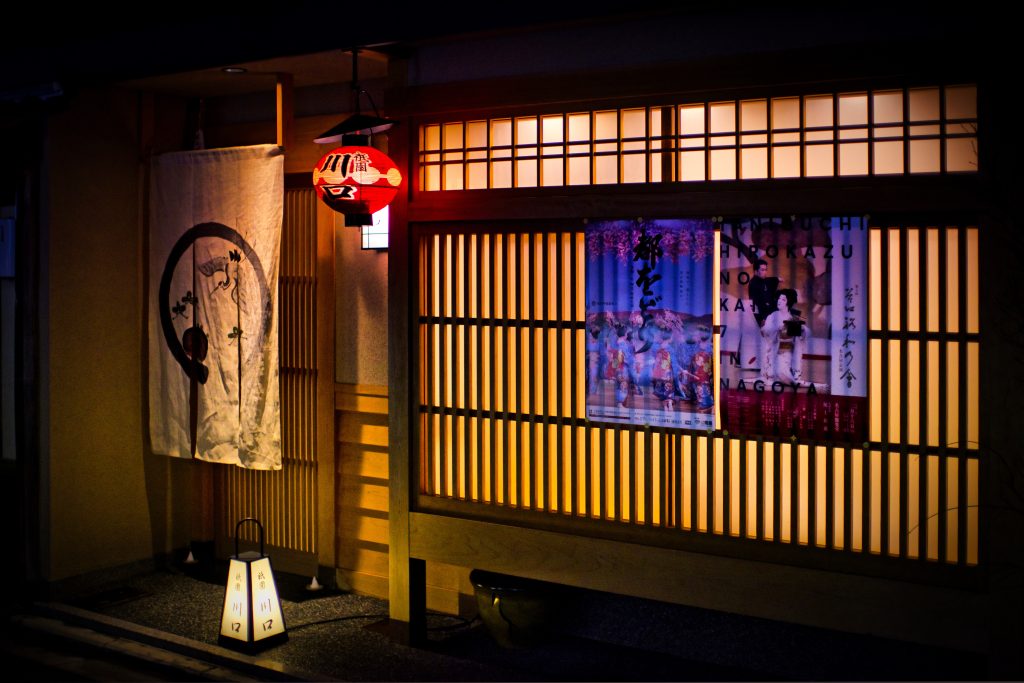
This episode includes several traditional Japanese architectural details: machiya townhouses with narrow street-facing fronts, shoji paper screens, tatami mats, wooden hallways, bamboo gates, stone basins, and lantern-lit garden paths.
The atmosphere is intimate rather than grand. Kyoto is felt through small details: cedar warmed by the day, paper windows glowing from within, rain-darkened stone, the soft movement of bamboo leaves, and the hush that settles after summer rain.

Summer in Kyoto is warm, humid, and deeply sensory. Rain often sharpens the scent of stone, moss, cedar, and greenery. The soundscape becomes part of the place — cicadas, dripping eaves, water basins, distant bells, wind chimes, and leaves moving in the night air.
Tanabata is traditionally associated with July 7, though celebrations may vary by region and calendar.
The most atmospheric time to experience Kyoto is often early morning or evening, when the streets are softer and quieter. Summer brings heat and humidity, but also rain-washed gardens, festival traditions, glowing lanterns, and a dreamlike evening mood.
For a quieter experience, wander respectfully through public streets in Gion, especially near the Shirakawa Canal, and avoid private alleys or intrusive photography. Kyoto has taken steps in recent years to protect parts of Gion from over tourism, so gentle, respectful travel matters here.
Visit Kiyomizu-dera early in the day or later toward evening if possible. Let yourself notice the approach as much as the temple itself — the slope of the streets, the wooden buildings, the mountain air, the sound of water, the feeling of the city opening below you.
Kyoto is not a place that gives itself fully to rushing. It is best received slowly.
Tonight’s journey invites you to release what does not need to follow you into sleep.
Like a wish tied to bamboo, your worries can be set down gently.
Like rainwater slipping from temple leaves, the day can move on without you holding it.
May you carry the peaceful heart of Kyoto with you.
Sleep well.